Usability testing
UXR bread and butter
I did my first usability test back in 2008, and it wasn’t under the most formal or ‘best’ practices. While I was working as a project manager for a research and web design company, I got pulled in to help with some moderated testing, because I had experience with doing research over the phone in my previous job (a very fun way to get thrown into the deep end!).
Thankfully I know how to do things properly nowadays, from a combination of self-directed learning, formal study, and lots of experience. There’s a reason this method is so popular - it can be done in a single sprint, you can pivot the study focus if needed, and the results can be shared (or observed) easily with the project team.
Accommodating the user base
A good test plan ensures that the participants will meet the criteria for the end product. It also needs to accommodate those participants and meet them where they are. For some B2C or B2B work, that’s as simple as writing a good screener for your online recruitment tool. In other cases, more effort or planning is needed. I did testing for a client called the Office of the Commissioner of Housing Equity, and their user base was folks who were low income, and sometimes disabled. These people were not to be found on online panels, and needed accessible environments and equipment to do the testing we needed. The testing I have done for the past few years at Rogers was with internal employees - these are subject matter experts who will raise new requirements on top of giving usability feedback. And maybe my favourite example - the time I was running usability testing for Newfoundland Power. I’m pretty good at writing scripts and follow up prompts to meet a certain time limit for a test, but in this case, I absolutely underestimated how friendly (and talkative) Newfoundlanders are, completely throwing off my whole schedule.
Agile usability testing
TELUS was a long-time client at Architech, and this testing was for a project our team has been working on since the fall of 2022. We were helping one of the teams at TELUS build a B2B solution for their Internet of Things (IoT) product offerings, taking the customers from the shopping journey through to the management of their purchased product(s). The storefront for the TELUS Business Marketplace (TBM) had a hard deadline to launch and we needed to prioritize our work to make sure we met our deadlines. Our team had recently done design and research work for the IoT platform that customers would use once they’d purchased a solution, and the client was so pleased with our outcomes that we were then tasked to design and build the storefront for the marketplace.
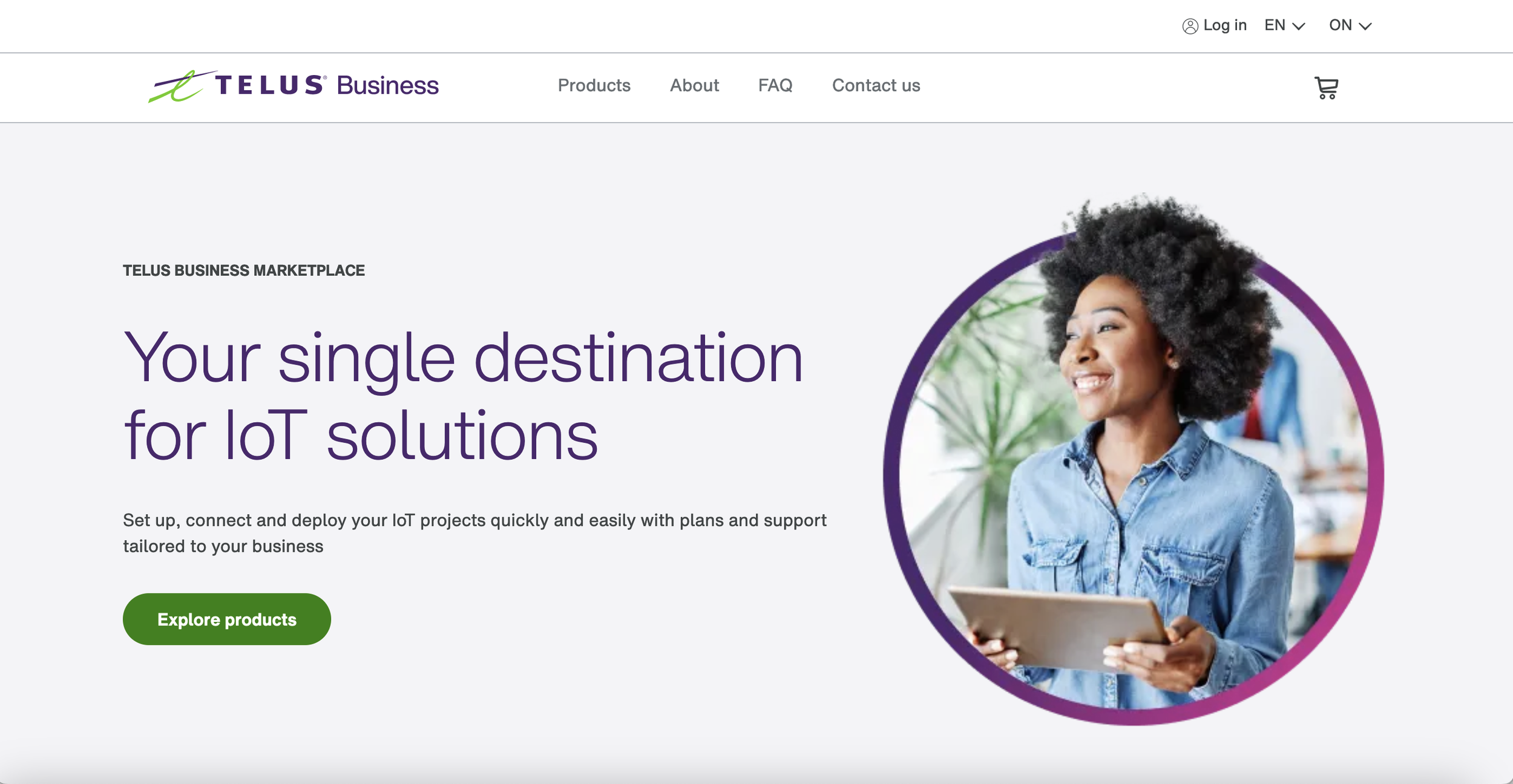
With our short timeline for launching this storefront, the team prioritized the pages needed for an MVP product and we organized them into sprints. Design, research, and development would be working in a lean UX process to quickly design, test, and build each feature and page needed for the MVP launch.
As a team we planned out pages and features that made sense to design and test in short flows, like configuring a product in the cart, or raising a support ticket in a customer account. Working closely with the designers to prepare test task scripts alongside the Figma prototypes they created, I could launch moderated tests and quickly deliver reports with recommendations for the designers to implement before they passed off their work to the development team.
Since we were working iteratively, I could also revisit steps in the customer flow that the design team had updated based on previous testing to evaluate whether the changes resulted in an improved user experience. We delivered the MVP site on time for the client at the end of summer 2023.
Outcomes
The marketplace drastically improved the deployment time for TELUS and their IoT customers. Before the storefront was implemented, it would take around 90 days for the order, fulfillment, and deployment cycle to be complete. With TBM launched, this 90 day timeframe was reduced to six days, an improvement delta of 93%. .
“Another vendor said it would not be easy, but Meg made it look like it was”
Moderated vs unmoderated testing
Personally, I always prefer moderated testing if the project timeline and budget will allow for it. You can get more in depth with participants, asking them follow up questions and probing if they take testing in an unexpected direction. When working with prototypes (instead of live websites) it can also be more flexible for unexpected technical hiccups. On a non-technical note, I also just enjoy chatting with people face to face.
However, unmoderated testing has its perks as well, when speed and/or quantity are the most important factors to consider in the test plan. In the past, I’ve run unmoderated testing in order to have participants review two different versions of a design, as well as to measure metrics like time on task to benchmark for future comparisons.
TL;DR
The beauty of usability testing is that you can create a test plan that will allow for most objectives, whether it’s evaluating a current experience, comparing two options for a task flow, or getting feedback on a new design or feature. Participants almost always come up with some insight that is unexpected, and those surprises are what keep me excited about research. While my first test back in 2008 might have been a little sketchy, it started me on the path to user research and the dozens of usability tests that were to follow.