Move the Dial
Overview
Move the Dial was a company that was dedicated to advancing women in the workspace, especially in the technology field. They were developing an app to facilitate mentoring relationships, and tasked me to conduct a discovery on the current market as well as the needs and attitudes of mentors and mentees to help guide their product strategy. Unfortunately, Move the Dial closed their doors during the pandemic, but this was still one of my favourite projects I’ve worked on in my time at Architech. My goal in this project was to help Move the Dial understand “What’s the ideal state for mentorship?”
Landscape scan
The client wanted a view of both the mentorship space for women, as well as a summary of what other programs were currently in the market for mentors and mentees. This 66-page report collected insights I gathered from secondary research reviewing whitepapers, academic reports, and exploring independent mentorship programs as well as programs at various corporations like Intel and PayPal.
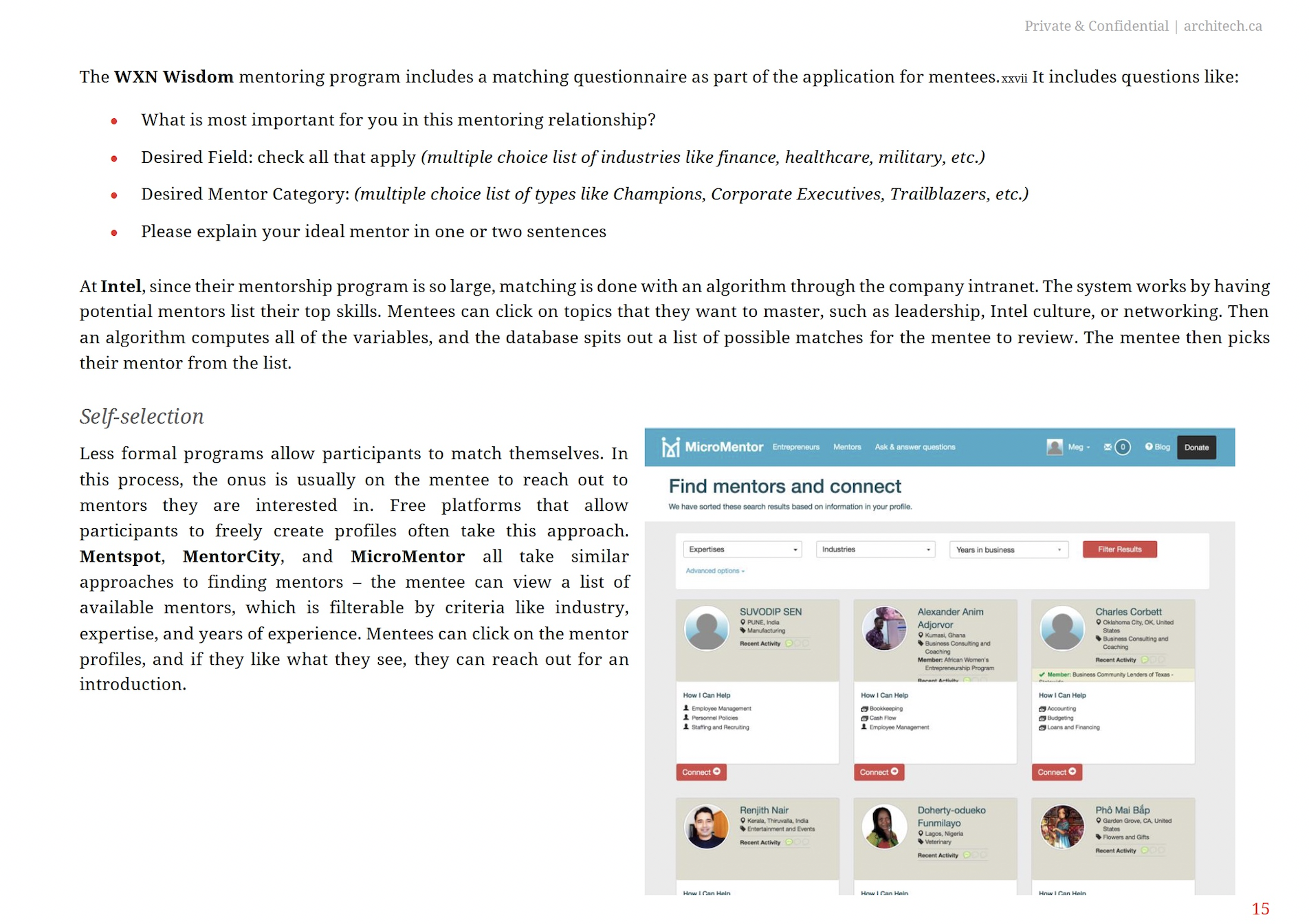
An example page from the landscape scan
I outlined the types of mentors, resources, and benefits for both mentors and mentees. I summarized the best practices for building a mentorship program, like the program goals, matching participants, contracts, and training. I also included information about selling a program, goal-setting, gamificaion, and various events of interest.
Interviews and workshops
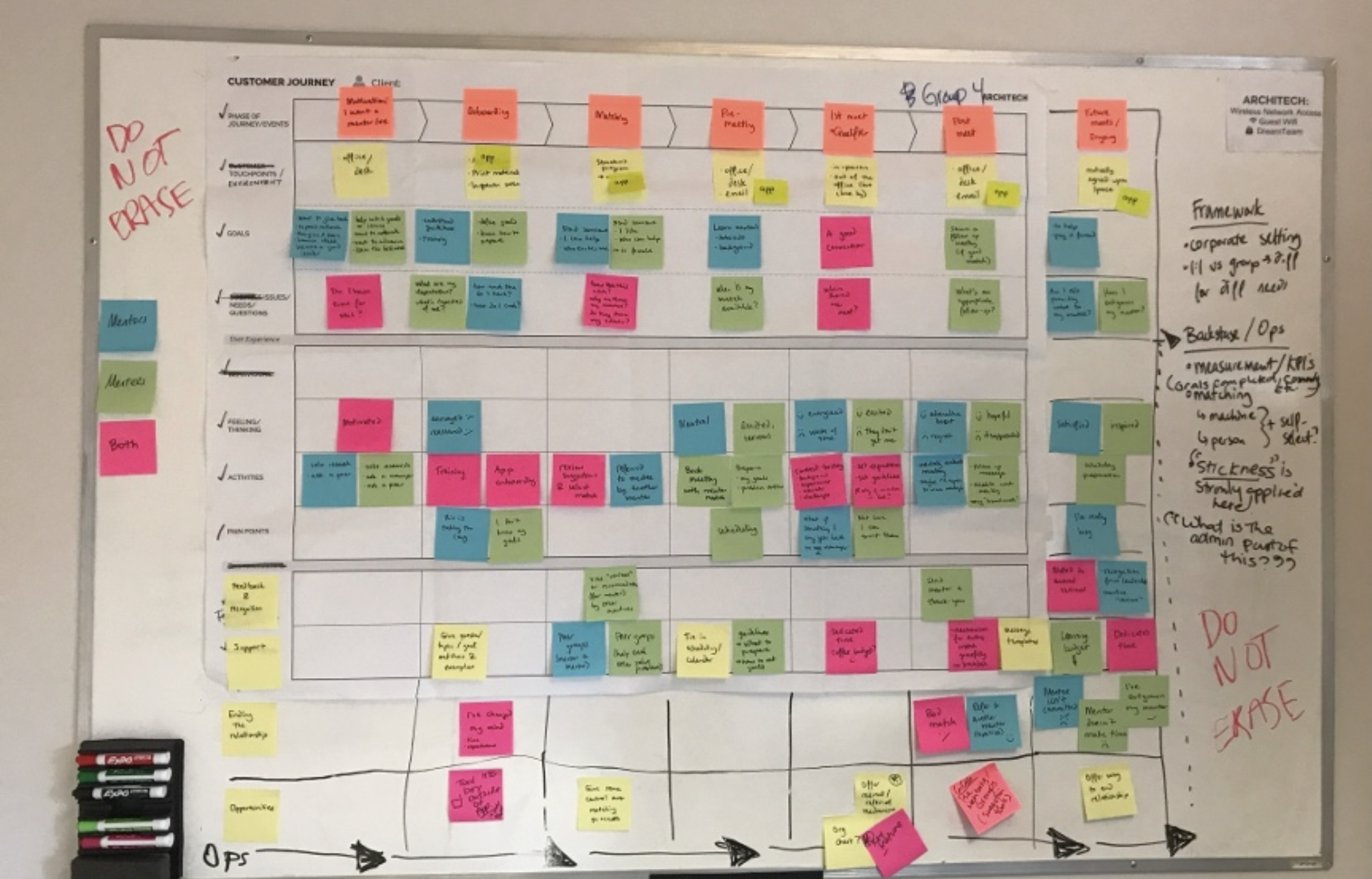
The bigger part of the project with Move the Dial was creating journey maps for mentors and mentees. After the landscape scan was drafted and I could write interview guides for both mentors and mentees, I conducted a series of 22 interviews with Canadian professional women to understand their experiences with mentorship so far in their careers.
“The best mentors, I can really bump ideas around with and they’ll contribute.. and when I walk out of the room, the best mentors, I feel like my idea’s been put on steroids, right? So I come in with something and then we’ve turned it into something more.”
After conducting and transcribing hours of interviews, I analyzed all of the feedback into a truly bonkers colour-coded spreadsheet to group feedback by theme and by stage in the journey. I took the findings from these interviews and started working on journey maps, one for mentors, and one for mentees. On a check-in with the client, after discussing my discovery that most mentors were also still mentees, Move the Dial requested that we create one artifact that showed the mentorship journey for both personas in one space, which was a real challenge for myself and the graphic designer I was working with.
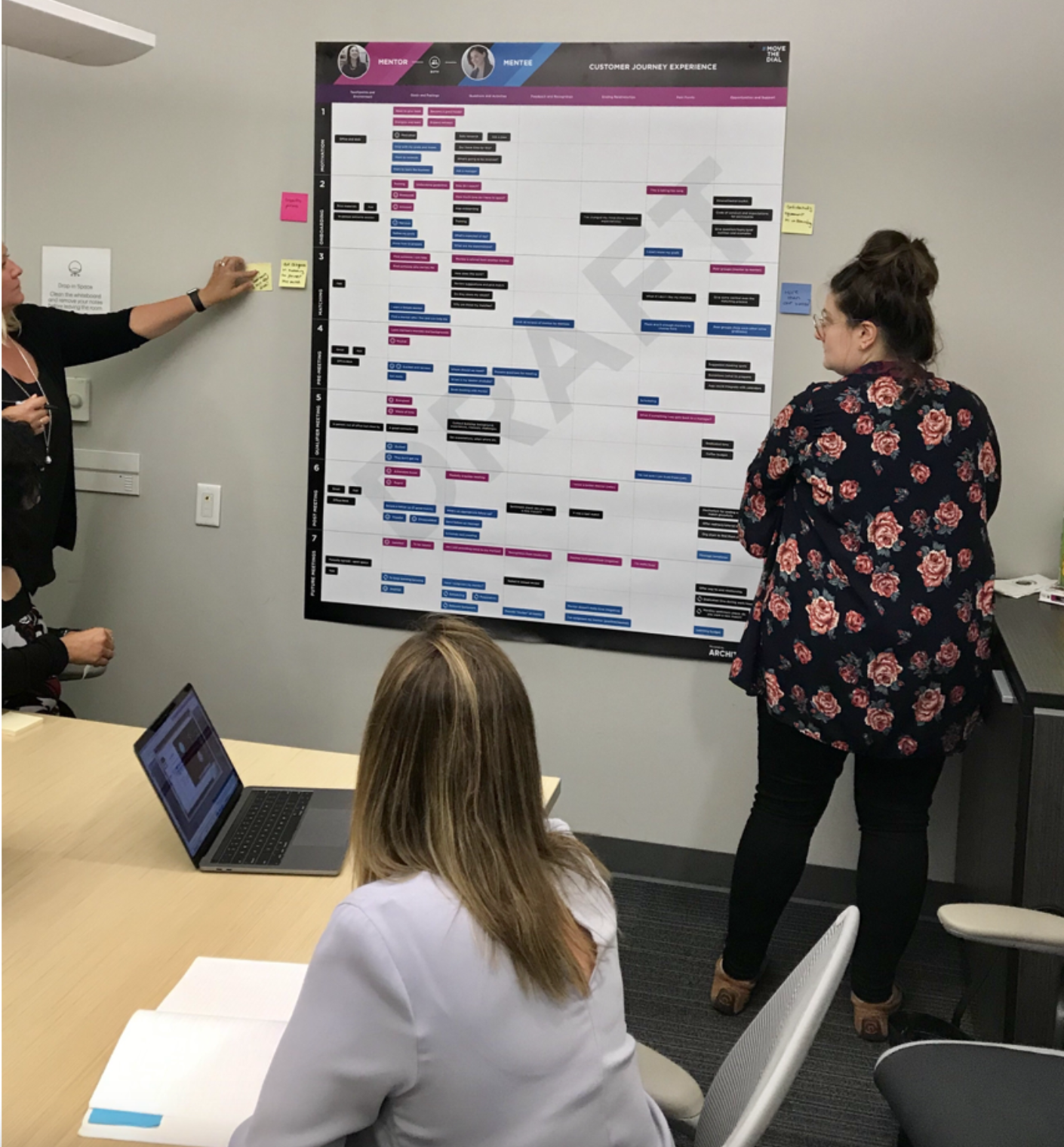
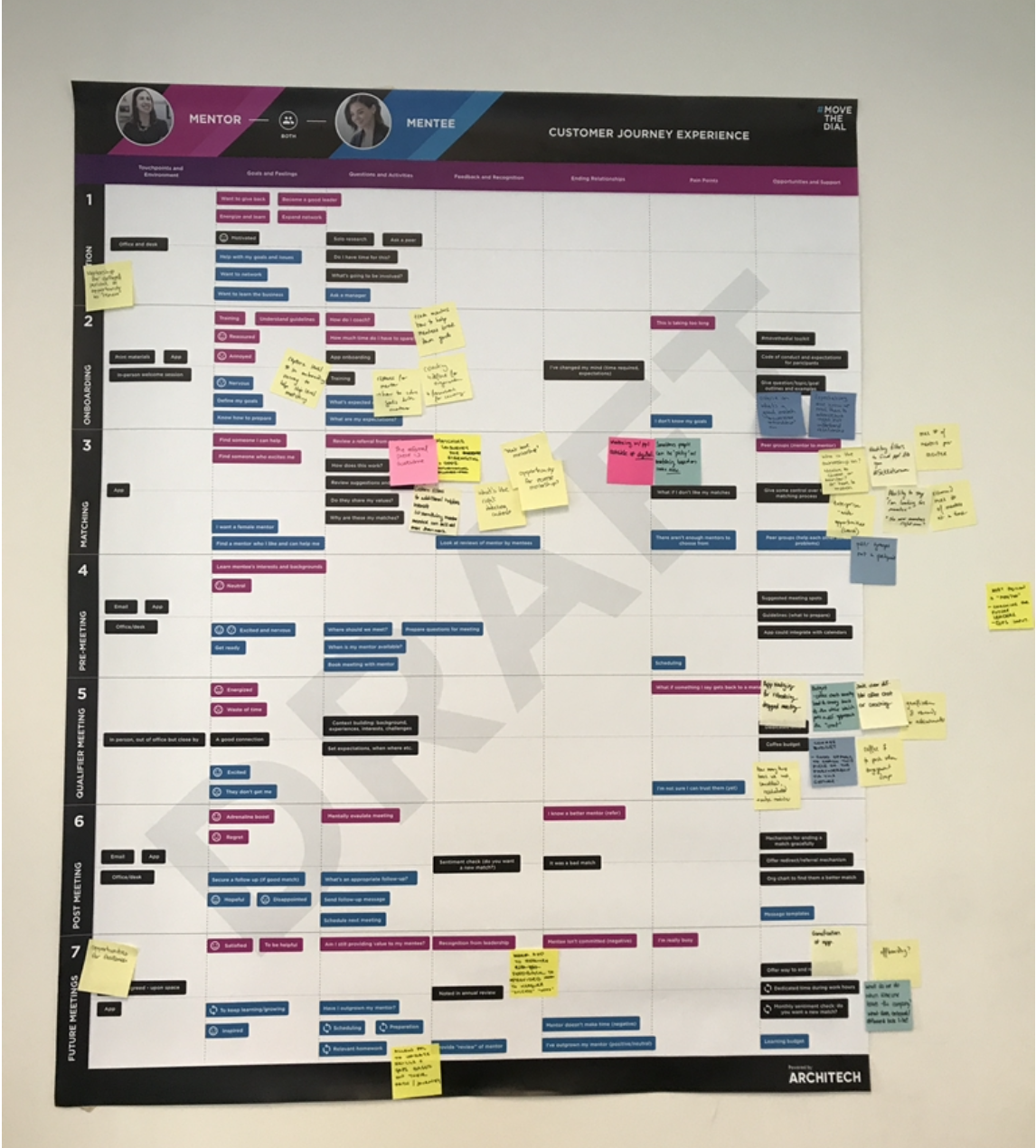
After drafting our journey map, I conducted two follow-up workshops with some of the women I had interviewed, so that they could review my work and suggest any additional insights that didn’t arise in our initial discussions. With these changes, our final work was presented to the client.
Outcomes
I handed over my research to the team at Move the Dial, who were going to be working with another partner to build their mobile application. Unfortunately, the company was one of the casualties of the pandemic, so this application never came to fruition. I’m still grateful to have spent so much time diving into the experiences of dozens of amazing women in the workplace, and I gained a great deal of interviewing experience from the project.